- Home /
- Shop /
- Blue Lined Angelfish (Chaetodontoplus septentrionalis)

Blue Lined Angelfish (Chaetodontoplus septentrionalis)
Blue Lined Angelfish (Chaetodontoplus septentrionalis)
Low stock
Couldn't load pickup availability
Description
| Key | Value |
|---|---|
| Scientific Name | Chaetodontoplus septentrionalis |
| Common Names | Blue Lined Angelfish, Bluebanded Angelfish |
| Personality | Shy at first, transitioning to semi-aggressive as an adult. |
Overview:
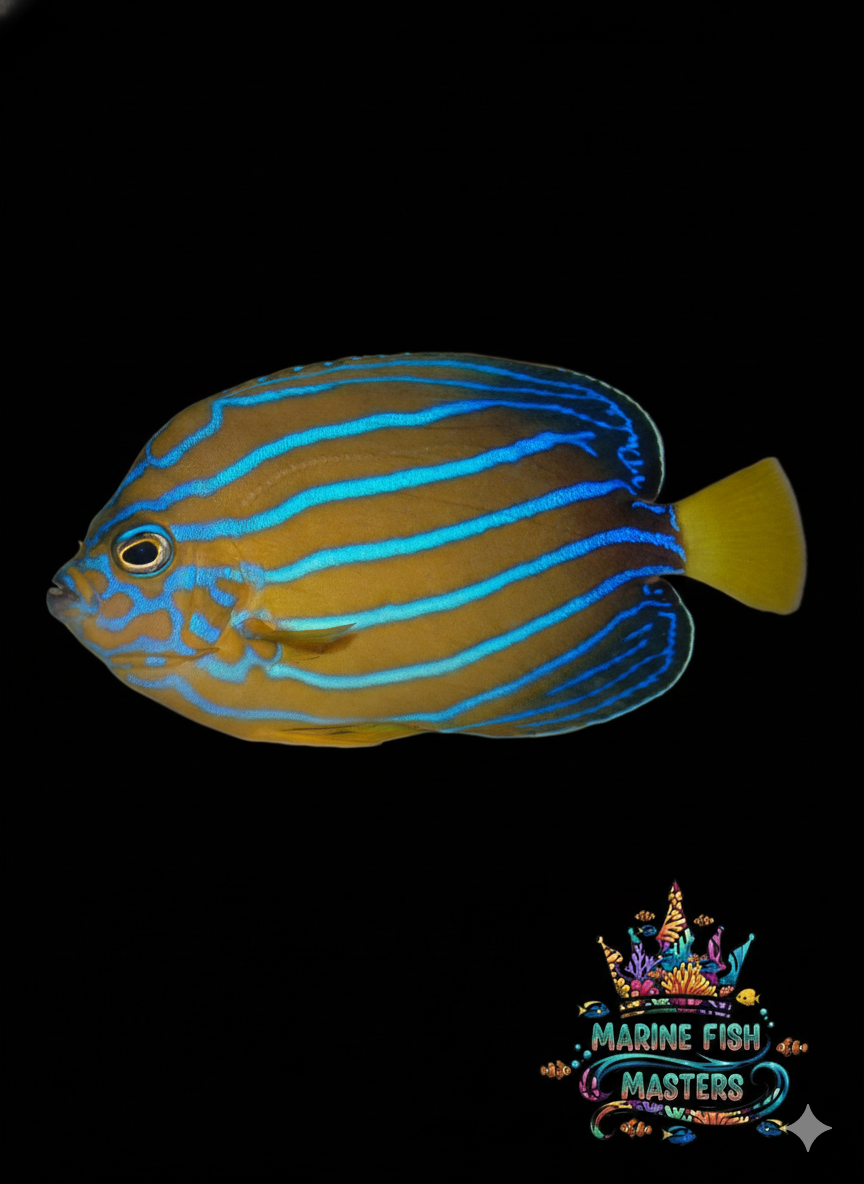
The Blue Lined Angelfish is a striking species prized for its vibrant coloration and unique patterning. Juveniles possess a dark black body accented by iridescent blue horizontal stripes, a yellow vertical bar behind the eye, and bright yellow caudal (tail) and white-outlined dorsal and anal fins. As the fish matures into an adult, its body transitions to a tan or yellow hue, maintaining the vivid blue horizontal striping that gives it its common name.
While generally shy upon introduction, this species will quickly adapt to a stable, mature aquarium environment. It can display semi-aggressive tendencies as it grows, making appropriate tank mate selection important. Its elegant, somewhat butterflyfish-like body shape and dazzling color contrast make it a sophisticated addition to a large marine display.
Care Information
Water Parameters
This angelfish thrives in pristine, stable water conditions typical of a healthy marine system.
| Parameter | Recommended Range |
|---|---|
| Specific Gravity (SG) | 1.020–1.025 |
| Temperature | 72–78° F (22–25.5° C) |
| pH | 8.1–8.4 |
| Alkalinity (dKH) | 8–12 |
Tank Requirements
A minimum tank size of 180 gallons is essential to provide adequate swimming space and stable water quality for an adult. The environment should be mature and include an abundance of live rock. Live rock serves a dual purpose: it provides natural grazing surfaces for microalgae and diatoms, and creates multiple caves and crevices for hiding places, which are crucial for this species, especially when first acclimated.
Diet and Feeding
The Blue Lined Angelfish is an omnivore with a crucial dietary requirement for sponge and tunicate material, which is vital for its long-term health. The diet should be varied and rich, consisting of:
- High-quality marine pellet or flake food.
- Frozen preparations such as mysis shrimp, brine shrimp (enriched with Spirulina), and finely shaved meaty items.
- Clam on the half shell.
- Algae sheets (Nori) for grazing.
- Angelfish-specific foods containing sponge material.
Juveniles should be fed frequently—about 3 to 5 times a day—to support rapid growth and health.
Compatibility and Reef Safety
This fish is classified as “Reef Safe with Caution.” While it will readily graze on nuisance microalgae, it is known to nip at and potentially damage the mantles of sessile invertebrates, including:
- Stony corals (LPS and SPS polyps)
- Soft corals
- Clam mantles
It is best introduced to a system with non-aggressive tank mates and should be the last angelfish added to the aquarium to minimize territorial disputes. If introducing a juvenile to an established tank, the use of an acclimation box is highly recommended to protect the young fish from established, dominant fish. Avoid pairing with seahorses or pipefish.
Specifications
| Specification | Details |
|---|---|
| Max Size | Up to 8 inches (approx. 20 cm) |
| Minimum Tank Size | 180 Gallons |
| Reef Compatible | With Caution |
| Temperament | Semi-Aggressive |
| Care Level | Difficult |
| Diet | Omnivore (requires sponge/algae material) |
| Color Form | Yellow, Tan, Blue, Black |
| Family | Pomacanthidae |