- Home /
- Shop /
- Blue Pelagic Pufferfish (Diodon eydouxii)

Blue Pelagic Pufferfish (Diodon eydouxii)
Blue Pelagic Pufferfish (Diodon eydouxii)
Low stock
Couldn't load pickup availability
Description
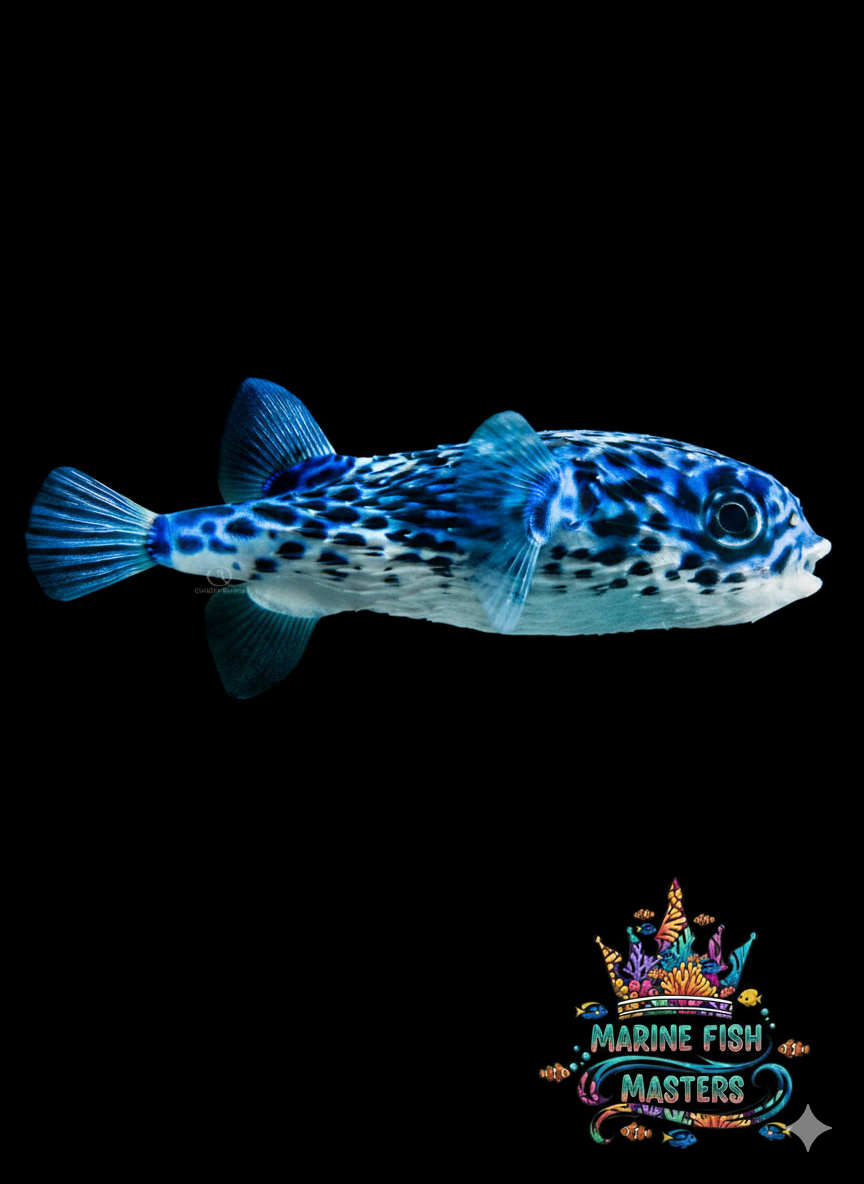
The Blue Pelagic Pufferfish, also known as the Blue Porcupine Puffer, is a rare and unique species highly sought after by marine enthusiasts. Unlike many reef-dwelling puffers, this species lives in the open ocean (pelagic zone), often near the surface, giving it a streamlined shape and a distinct coloration.
Appearance:
- Coloration: Juveniles are especially striking, displaying a gorgeous, steely to deep azure blue over their bodies. While the coloration may become slightly more subdued as they mature, the distinct blue hue remains a key feature.
- Porcupine Defense: Like all porcupine puffers (Diodon genus), its body is covered in small spines that stand erect when the fish inflates with water, its primary defense mechanism against predators.
- Intelligence: As a member of the puffer family, this fish possesses a high degree of personality and intelligence, often quickly recognizing its owner and displaying engaging behavior.
Unique Characteristics:
This species is notable for being smaller and more slender than the common Porcupine Puffer (Diodon hystrix), making it a more suitable choice for certain home aquariums. Its ecological niche as an open-water swimmer has resulted in a slightly more torpedo-shaped body compared to its reef-based cousins.
3. Care Information
Aquarium Requirements
- Tank Size & Setup: Due to their active nature, a spacious tank of at least 125 gallons is highly recommended to provide ample swimming room. A glass aquarium is often preferred, as their strong beaks can occasionally leave deep scratches on acrylic.
- Filtration & Flow: These puffers are messy eaters and produce a significant bio-load, necessitating robust filtration, including an effective protein skimmer and regular water changes. While they are stronger swimmers than most puffers, they are not built for constant, strong current. It is best to balance a high water turnover rate (for filtration) with diffused flow (using multiple return outlets or baffles) to avoid stressing the fish.
- Aquascaping: Provide plenty of secure rockwork, including caves and swim-throughs, for exploration and security. Ensure all decor is stable, as puffers are known to bite and "sample" objects, including decorations and even equipment. Keep heaters and other vulnerable equipment inaccessible (e.g., in a sump) to prevent damage. A bare-bottom tank is a viable option to aid in easy cleanup of uneaten food.
- Compatibility: This is a Fish-Only species. Compatible tankmates should be robust enough to handle the puffer's presence (such as certain Angels, Tangs, and Wrasses) or fast/elusive enough to avoid it. Avoid housing them with aggressive Triggerfish or slow-moving, delicate species.
Water Parameters
Maintaining stability and high water quality is crucial for the health of this species.
|
Parameter |
Recommended Range |
|
Temperature |
Low to mid 70s° F (e.g., 72–76° F) |
|
Specific Gravity (Salinity) |
1.021–1.026 |
|
pH |
7.8–8.4 |
|
Nitrate Level |
Keep below 15 ppm through regular water changes |
Feeding and Diet
- Dietary Needs: As a carnivore, the Blue Pelagic Puffer requires a protein-rich diet.
- Beak Maintenance: Like all Diodon puffers, their beak is constantly growing and must be worn down on hard food items. Without this, the beak can become overgrown, making it difficult for the fish to eat.
-
Required Foods (for dental health):
- Hard-shelled invertebrates (e.g., clams, mussels, cockles in the shell).
- Whole, shelled shrimp.
- Escargot.
-
Supplementary Foods:
- Market shrimp, krill, and frozen mysis shrimp.
- Pelleted foods (once they accept them) should be used as a supplement, not a primary diet, as they do not provide the necessary abrasion for the beak.
- Note: This fish will actively hunt and consume all standard cleanup crew invertebrates (snails, hermit crabs, shrimp, etc.) in the aquarium.
Specifications
| Specification | Details |
|---|---|
| Scientific Name | Diodon eydouxii |
| Family | Diodontidae (Porcupinefish) |
| Common Names | Blue Pelagic Porcupine Puffer, Blue Puffer |
| Maximum Size | Rarely exceeds 8–12 inches (Adults often closer to 10") |
| Minimum Tank Size | 125 gallons |
| Temperament | Peaceful, but will consume invertebrates |
| Care Level | Moderate |
| Diet | Carnivore |
| Reef Compatible | No |
| Origin | Worldwide tropical oceans (Pelagic, near-surface zones) |