- Home /
- Shop /
- Scott's Greenback Fairy Wrasse (Cirrhilabrus scottorum)

Scott's Greenback Fairy Wrasse (Cirrhilabrus scottorum)
Scott's Greenback Fairy Wrasse (Cirrhilabrus scottorum)
Low stock
Couldn't load pickup availability
Description
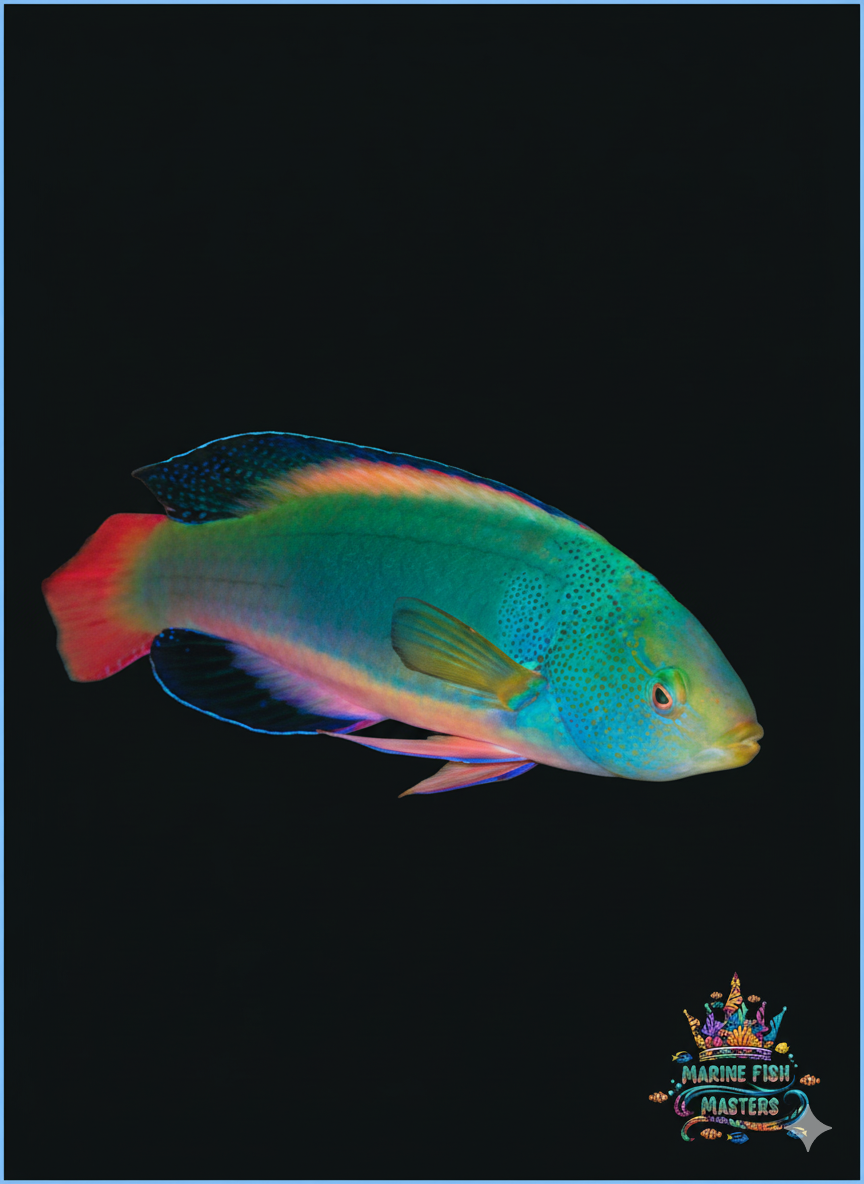
The Scott's Greenback Fairy Wrasse is a highly prized member of the Cirrhilabrus genus, renowned for its striking, variable, and dynamic coloration. The fish's appearance can differ significantly based on its geographic origin (such as Fiji, Tonga, or Australia), life stage, and mood. The variety commonly referred to as the Greenback often displays a vivid green or blue-green body that transitions into a reddish or rosy underside.
Males exhibit the most spectacular patterns, featuring blue, yellow, and red highlights across their fins, which may be accented by distinct black or black-trimmed edges, particularly on the dorsal fin. They are known for their "flashing" behavior, where they rapidly intensify and shift colors during courtship or territorial displays, offering a dazzling spectacle for the observer. This is a generally peaceful, active fish that is an excellent addition to most community and reef aquariums. Like other Fairy Wrasses, a secured aquarium top is a must to prevent jumping.
Care and Aquarium Information
Aquarium Environment
- Tank Size: While smaller individuals can be housed in 50 gallons, an aquarium of 90 gallons or more is recommended, especially for housing multiple wrasses or a male/harem setup.
- Habitat: Provide a well-established environment with plenty of live rock to create a complex structure of caves and hiding spots. This allows the fish to establish territories and retreat when necessary. They also appreciate open areas for swimming.
- Security: A secure, tight-fitting lid is essential to prevent this fish from jumping out of the aquarium.
- Substrate: This species does not burrow into the sand for sleeping, so a standard reef substrate is suitable.
Diet and Feeding
- Feeding: As a carnivore, the Scott's Fairy Wrasse requires a high-protein diet.
- Food Types: Offer a varied mix of high-quality, meaty foods. This should include enriched frozen items like Mysis shrimp, brine shrimp, copepods, and finely chopped marine seafood. They typically accept high-quality marine flake and pellet foods once acclimated.
- Frequency: Feed 3-4 small meals throughout the day to support their high metabolism and maintain optimal health and vibrant coloration.
Temperament and Compatibility
- Reef Safe: Scott's Fairy Wrasses are considered reef-safe and will not harm corals or sessile invertebrates. They may, however, pick at small copepods and other micro-crustaceans in the rockwork.
- Social Behavior: They are generally peaceful but can become semi-aggressive toward smaller, shier fish, especially those of similar shape or color, such as certain dottybacks or basslets.
- Group Housing: If you wish to keep multiple individuals, they should be kept in a harem of one male and several females. Introducing all fish simultaneously, or introducing the female(s) first, is the best strategy. Only one male should be kept per tank unless the system is very large (200+ gallons), as males will fight.
-
Hermaphroditism: Like all Cirrhilabrus species, they are protogynous hermaphrodites, beginning life as females and changing to terminal males when dominant.
Specifications
| Specification | Details |
|---|---|
| Scientific Name | Cirrhilabrus scottorum |
| Common Name | Scott's Fairy Wrasse, Scott's Velvet Wrasse, Black-fin Fairy Wrasse |
| Maximum Size | Up to 5–6 inches (12.5–15 cm) |
| Minimum Tank Size | 50–90 gallons (Larger is better for harems) |
| Care Level | Easy to Moderate |
| Temperament | Peaceful to Semi-aggressive (towards similar species) |
| Reef Compatible | Yes |
| Diet | Carnivore |
| Origin | South Pacific Ocean (Australia, Fiji, Cook Islands) |
| Water Temperature | 72–78°F (22–25.5°C) |
| Salinity (Specific Gravity) | 1.020–1.025 |
| pH Range | 8.1–8.4 |
| Alkalinity (dKH) | 8–12 |