- Home /
- Shop /
- Madagascar Flasher Wrasse (Paracheilinus hemitaeniatus)

Madagascar Flasher Wrasse (Paracheilinus hemitaeniatus)
Madagascar Flasher Wrasse (Paracheilinus hemitaeniatus)
Low stock
Couldn't load pickup availability
Description
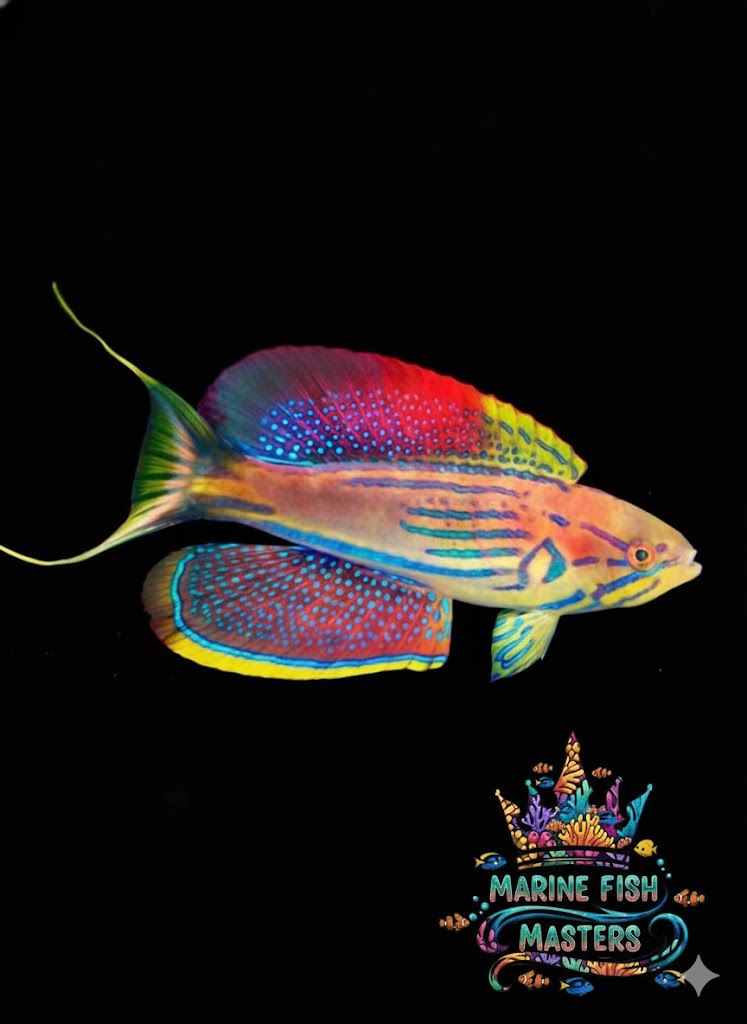
The Madagascar Flasher Wrasse (Paracheilinus hemitaeniatus), sometimes referred to as the Half-Banded Flasher Wrasse, is a captivating and active member of the Flasher Wrasse genus. This species is celebrated for the male's spectacular "flashing" displays, where its colors and fins intensify dramatically during courtship rituals or when feeling threatened.
Males typically display an orange-to-reddish body adorned with horizontal blue streaks. The distinguishing feature is the elongated dorsal and caudal fins, which become translucent and shimmer with brilliant blue and purple spots and streaks when flashing. Females and juvenile males are more subdued, generally exhibiting duller shades and lacking the filamentous fin extensions. This species is peaceful, hardy, and completely reef-safe, making it a fantastic and dynamic addition to any well-maintained reef or fish-only aquarium.
Care and Aquarium Information
Aquarium Environment
- Tank Size: A minimum tank size of 50 gallons is recommended to provide adequate swimming space and stable water conditions.
- Habitat: The aquarium should be well-established and feature ample live rock structure with many crevices, caves, and overhangs. This allows the wrasse to feel secure, rest, and hide. They appreciate good water flow to mimic their natural reef habitat.
- Security: Flasher Wrasses are known to jump, especially when startled or new to the tank. A tight-fitting canopy or lid is mandatory to prevent escape.
- Substrate: Unlike some other wrasses, this species does not bury itself in the sand for sleeping.
Diet and Feeding
- Feeding: As an active carnivore, the Madagascar Flasher Wrasse must be fed a variety of high-quality, meaty foods.
- Food Types: The diet should include vitamin-enriched frozen foods such as Mysis shrimp, brine shrimp, and cyclops, as well as high-quality marine flakes and pellets. A continuous supply of micro-fauna like copepods in the live rock is highly beneficial.
- Frequency: Given their small size and high metabolism, it is best to feed them multiple small portions throughout the day (3-4 times).
Temperament and Compatibility
- Reef Safe: This species is completely reef-safe and will not pose a threat to corals or most invertebrates.
- Social Behavior: The Madagascar Flasher Wrasse is one of the most peaceful wrasses and is an excellent community fish. They generally coexist well with other wrasses, including other Paracheilinus species, provided the tank is large enough.
- Group Housing: The best way to enjoy their namesake "flashing" behavior is by keeping a single male with multiple females (a harem). Always introduce all wrasses simultaneously or females before the male. Only keep one male per tank to prevent territorial aggression.
- Hermaphroditism: Like all Flasher Wrasses, they are protogynous hermaphrodites, meaning all individuals start as females, and the dominant fish in a group will transition into a terminal male.
Specifications
| Specification | Details |
|---|---|
| Scientific Name | Paracheilinus hemitaeniatus |
| Common Name | Madagascar Flasher Wrasse, Half-Banded Flasher Wrasse |
| Maximum Size | Up to 4 inches (10 cm) |
| Minimum Tank Size | 50 gallons |
| Care Level | Easy to Moderate |
| Temperament | Peaceful |
| Reef Compatible | Yes |
| Diet | Carnivore |
| Origin | Western Indian Ocean (Madagascar, possibly Red Sea/Africa) |
| Water Temperature | 72–78°F (22–25.5°C) |
| Salinity (Specific Gravity) | 1.020–1.025 |
| pH Range | 8.1–8.4 |
| Alkalinity (dKH) | 8–12 |