- Home /
- Shop /
- Multibar Banded Angelfish (Paracentropyge multifasciata)

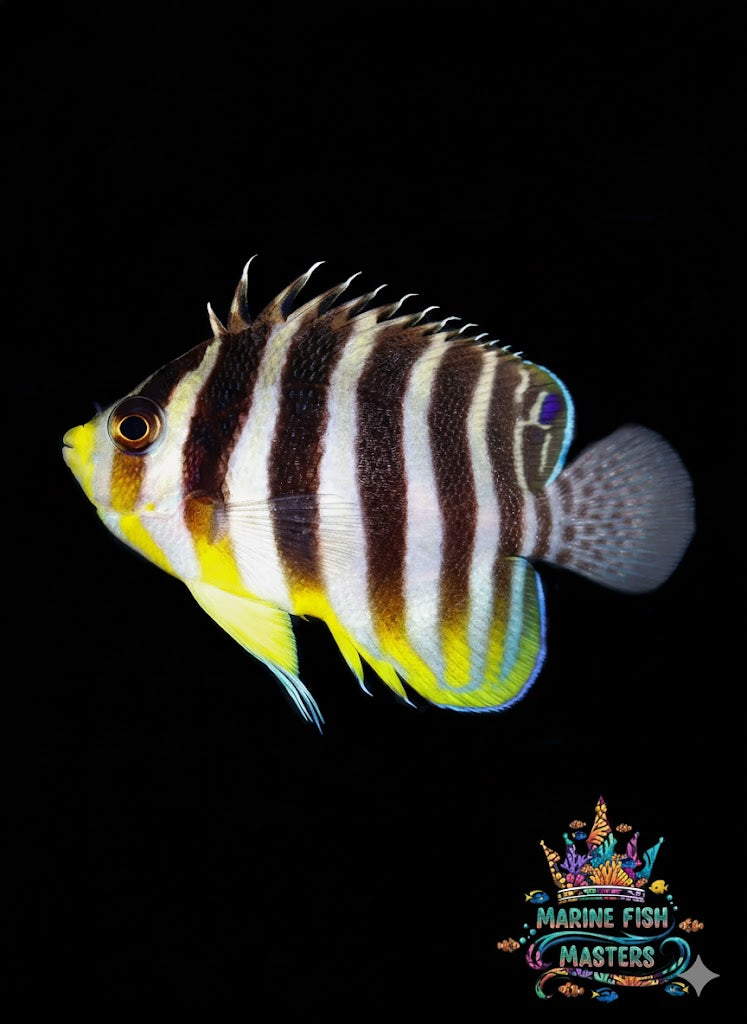
Multibar Banded Angelfish (Paracentropyge multifasciata)
Multibar Banded Angelfish (Paracentropyge multifasciata)
Low stock
Couldn't load pickup availability
Description
The Multibar Banded Angelfish, often referred to as the Many Banded Angel, is a strikingly beautiful dwarf angelfish that adds an element of rare elegance to the marine aquarium. Its body is adorned with a mesmerizing pattern of vertical black stripes that sharply contrast with lighter bands of yellow-white, giving the fish its namesake "multibar" appearance. The caudal (tail) fin is typically bright yellow or white, sometimes flecked with black.
This species is generally considered cryptic, meaning it prefers to inhabit caves and shaded areas among complex rock structures. While the wild-caught variety is known to be challenging and difficult to acclimate, especially regarding diet (leading to an "Expert Only" rating), captive-bred specimens are notably hardier, more accustomed to aquarium life, and more readily accept prepared foods, making them a more accessible option for experienced hobbyists.
Care and Aquarium Information
Aquarium Environment
- Tank Maturity: This fish requires a very mature and stable aquarium with excellent water quality. It is sensitive to sudden changes or poor conditions.
- Aquascape: A complex environment is essential. Provide abundant live rock with numerous caves, crevices, and arches. These structures are vital for grazing, security, and establishing a retreat, which helps the fish settle in and reduces stress.
- Acclimation: Proper acclimation is crucial. Individuals collected from deeper waters may be susceptible to swim bladder issues. Ensure your fish is well-rested and eating before introduction.
Diet and Feeding
- Finicky Eater: The Multibar Angel can be a finicky eater, especially initially. It is paramount that you acquire an individual that is already alert and consistently eating at the time of purchase.
- Variety is Key: Offer a varied, omnivorous diet. The natural diet includes sponges, so prepared angelfish foods formulated with sponge material are highly recommended. Supplement with small, meaty items like high-quality frozen mysis shrimp, enriched brine shrimp, and clam, along with herbivore flakes or pellets.
- Feeding Frequency: Feed small amounts frequently, ideally 3 to 4 times per day, to support its grazing behavior and ensure it receives adequate nutrition. Captive-bred specimens are generally much easier to transition onto a prepared food regimen.
Temperament and Compatibility
- Social Behavior: This dwarf angel is considered semi-aggressive but is often quite shy and easily intimidated by larger or more boisterous tank mates, particularly during its initial settling phase.
- Angelfish: It is best kept as the sole dwarf angelfish (Centropyge or Paracentropyge species) in the aquarium to prevent territorial conflicts.
- Reef Safety Warning: Like all dwarf angelfish, the Multibar Angel is Reef Safe With Caution. While many individuals will ignore most corals (SPS and soft corals), there is a risk it may nip at the fleshy polyps of certain Large Polyp Stony (LPS) corals, such as Acanthastrea (Acans) or Clams. Monitor the fish closely upon introduction to a reef tank.
Specifications
| Specification | Details |
|---|---|
| Scientific Name | Paracentropyge multifasciata |
| Common Name | Multibar Angel, Many Banded Angelfish |
| Maximum Size | Up to 4.5 inches (11.5 cm) |
| Minimum Tank Size | 70–75 gallons |
| Care Level | Expert Only (Wild-Caught); Moderate (Captive-Bred) |
| Temperament | Semi-aggressive (Can be shy/cryptic but may be territorial toward other dwarf angels) |
| Reef Compatible | With Caution |
| Diet | Omnivore (Sponge, Meaty foods, Herbivore preparations) |
| Water Temperature | 72–78°F (22–25.5°C) |
| Salinity (Specific Gravity) | 1.020–1.025 |
| pH Range | 8.1–8.4 |
| Alkalinity (dKH) | 8–12 |