- Home /
- Shop /
- Porcupine Pufferfish (Diodon holocanthus)

Porcupine Pufferfish (Diodon holocanthus)
Porcupine Pufferfish (Diodon holocanthus)
Low stock
Couldn't load pickup availability
Description
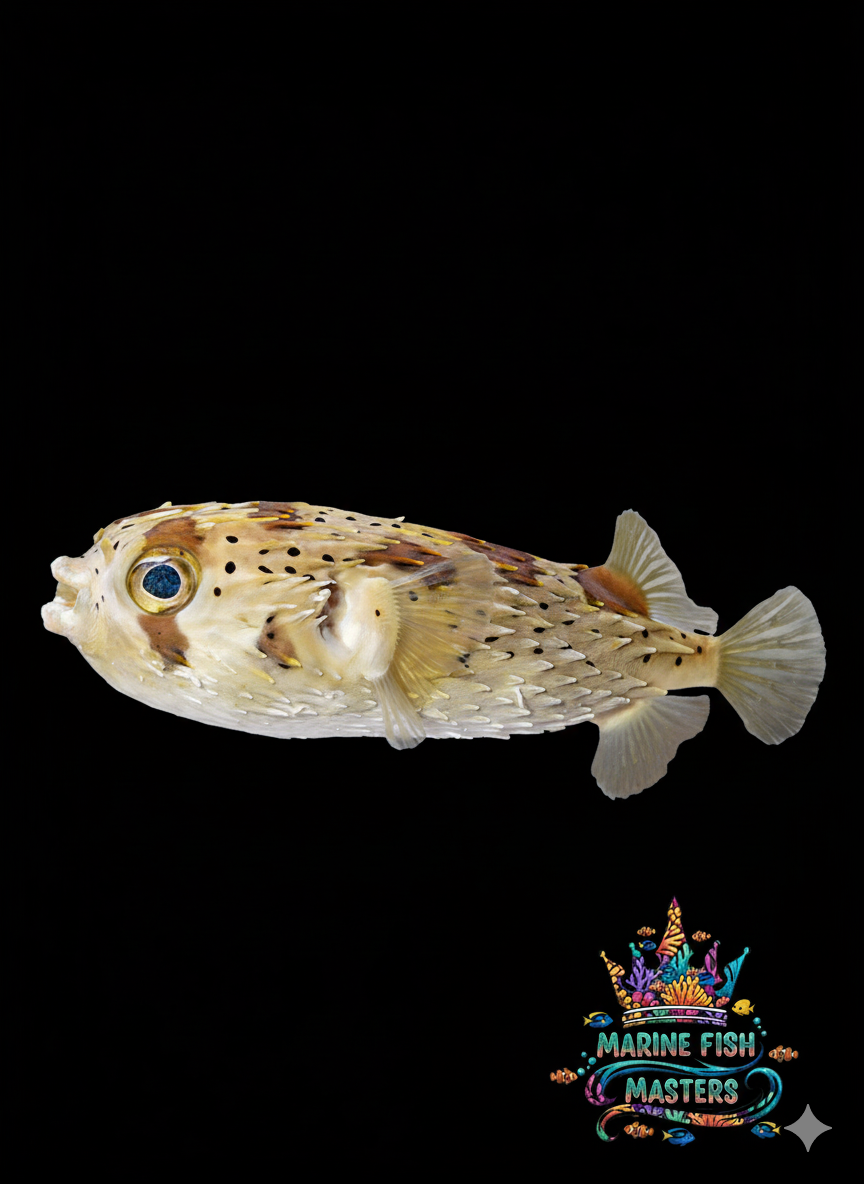
The Porcupine Pufferfish, also known as the Longspined Porcupinefish, is a highly recognizable and intelligent marine species famous for its unique defense mechanism. Covered in sharp, visible spines, this fish has the remarkable ability to inflate its body to nearly double its normal size when threatened, causing its spines to stand erect and deter predators.
In terms of physical features, the puffer's coloration typically ranges from a light gray to mottled tan, often accented with dark spots. Instead of traditional teeth, this species possesses a fused, powerful, beak-like structure that continuously grows throughout its life. It lacks pelvic fins, relying on its pectoral fins for movement, which results in a slow, almost hovering swimming style. They are known for their inquisitive nature and highly personable temperament, often recognizing and interacting with their owners.
3. Care Information
Aquarium Requirements
- Tank Setup: A large aquarium (180 gallons minimum) is essential. The setup should include ample rockwork, caves, and crevices to provide hiding spots, balanced with large, open areas for swimming.
- Compatibility: Best suited for a Fish-Only with Live Rock (FOWLR) environment. They are semi-aggressive and may occasionally nip the fins of slower-moving tank mates. Choose non-aggressive, larger fish as tank companions.
- Reef Safety: Not Reef Compatible. The Porcupine Puffer’s natural diet includes invertebrates. It will consume snails, hermit crabs, sea stars, sea urchins, and other ornamental inverts, and may also pick at certain soft corals.
Water Parameters
Maintaining stable, high-quality water is crucial for the health of this species.
| Parameter | Recommended Range |
|---|---|
| Temperature | 72–78° F |
| Specific Gravity (Salinity) | 1.020–1.025 |
| pH | 8.1–8.4 |
| Alkalinity (dKH) | 8–12 dKH |
Feeding and Diet
- Dietary Needs: As an omnivore, the Porcupine Puffer requires a varied and robust diet of meaty foods, fed multiple times per day.
- Beak Maintenance: Due to their continuously growing, fused beak, it is critical to regularly provide hard-shelled food items. These act as a natural way to wear down the beak, preventing overgrowth that can lead to feeding issues.
-
Recommended Foods:
- Hard-shelled shrimp (with the shell intact)
- Clams and mussels
- Krill and squid
- Sea urchins (if available)
Specifications
| Specification | Details |
|---|---|
| Scientific Name | Diodon holocanthus |
| Family | Diodontidae |
| Common Names | Porcupine Pufferfish, Longspined Porcupinefish |
| Maximum Size | Up to 12 inches (1 foot) |
| Minimum Tank Size | 180 gallons |
| Temperament | Semi-Aggressive |
| Care Level | Moderate/Intermediate |
| Diet | Omnivore |
| Origin | Indo-Pacific, including Fiji and the Philippines; also found in the East and West Americas |