- Home /
- Shop /
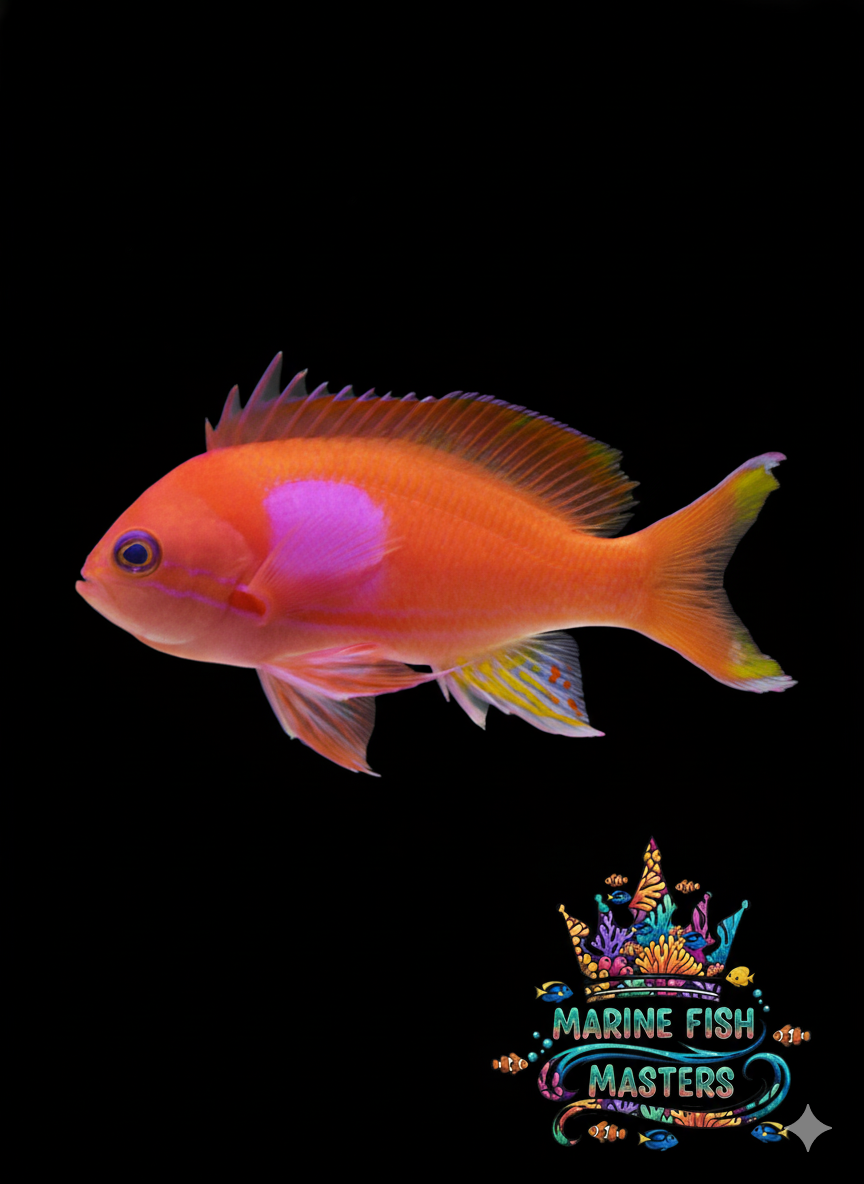
- Squareback Anthias (Pseudanthias pleurotaenia)

Squareback Anthias (Pseudanthias pleurotaenia)
Squareback Anthias (Pseudanthias pleurotaenia)
Couldn't load pickup availability
Description
The Squareback Anthias, also known as the Squarespot or Purple Blotch Anthias, is a popular and visually impressive member of the Anthias family (Pseudanthias genus). Known for their stunning sexual dimorphism (difference between males and females), these fish are a captivating addition to a mature marine aquarium.
Appearance:
- Male: Males are predominantly pink to reddish-pink with a lavender or purplish belly. Their most distinguishing feature is a bold, squarish or rectangular patch of purple or magenta on their flanks, located just behind the pectoral fin, which gives the fish its common name. The dorsal fin is often elongated.
- Female: Females have a vibrant yellow to yellow-orange body with a lavender wash on the belly. They generally lack the prominent square patch and instead may feature a thin blue line extending from the snout to the pectoral fin.
- General: Like all anthias, they are active, mid-water swimmers that bring a beautiful flash of color to the water column, particularly when kept in a group.
Unique Characteristics:
All Anthias species are hermaphroditic. They live in a harem structure, typically consisting of one dominant male and several females. If the male is removed or perishes, the largest female in the group will often undergo a sex change to become the new dominant male.
Care Information
Aquarium Requirements
- Tank Size & Setup: A minimum of 100 gallons is needed for a single Squareback Anthias, while a group requires a larger aquarium of 180 gallons or more to provide sufficient swimming space and territory. They thrive in established tanks with mature filtration.
- Social Structure: This species does best when kept in a social group, ideally a harem consisting of one male and several females. If multiple males are introduced without adequate space and a large number of females, aggression will be high. Always introduce females before introducing a male.
- Aquascaping: Provide ample live rock with numerous caves, overhangs, and crevices. This offers security and places for females (or the sub-dominant fish) to retreat from the male's territorial displays.
- Lighting: In nature, this fish lives at deeper reef levels and mid-water. They prefer moderate or indirect lighting; very intense, direct light may cause their colors to fade.
- Reef Safety: Squareback Anthias are reef compatible and pose no threat to corals or sessile invertebrates.
Water Parameters
Stable, high-quality water is critical, as this species is often found in deep, pristine ocean environments.
|
Parameter |
Recommended Range |
|
Temperature |
72–78° F |
|
Specific Gravity (Salinity) |
1.020–1.025 |
|
pH |
8.1–8.4 |
|
Alkalinity (dKH) |
8–12 dKH |
Feeding and Diet
- Frequent Feeding is Essential: Anthias are planktivores in the wild, constantly feeding on tiny organisms throughout the day. They require a steady and frequent food supply in the aquarium. Feed small amounts multiple times per day (3–5 times is ideal) to mimic their natural feeding behavior and maintain their health.
- Dietary Needs: Their diet should consist of small, meaty, enriched foods.
-
Recommended Foods:
- Frozen Mysis Shrimp (enriched is best)
- Enriched Frozen Brine Shrimp
- Copepods and Amphipods (an attached refugium can provide a beneficial, continuous supply)
- High-quality marine flake or pellet foods (they may learn to accept these over time)
Specifications
| Specification | Details |
|---|---|
| Scientific Name | Pseudanthias pleurotaenia |
| Family | Serranidae (Sea Basses and Anthias) |
| Common Names | Squareback Anthias, Squarespot Anthias, Mirror Anthias |
| Maximum Size | Up to 7.75–8 inches |
| Minimum Tank Size | 100 gallons for a single fish; 180 gallons for a group/harem |
| Temperament | Semi-aggressive (territorial with conspecifics) |
| Care Level | Moderate |
| Diet | Carnivore/Planktivore |
| Reef Compatible | Yes |
| Origin | Indo-Pacific (Western Pacific, including Sri Lanka, Philippines, Melanesia) |